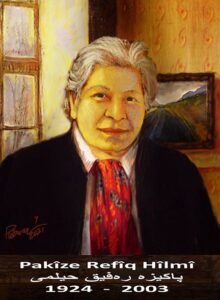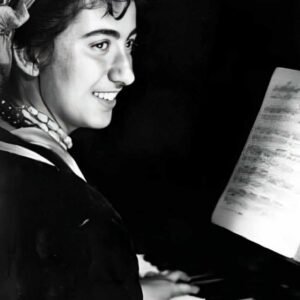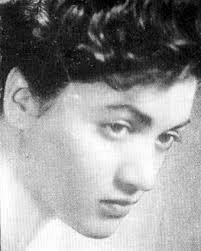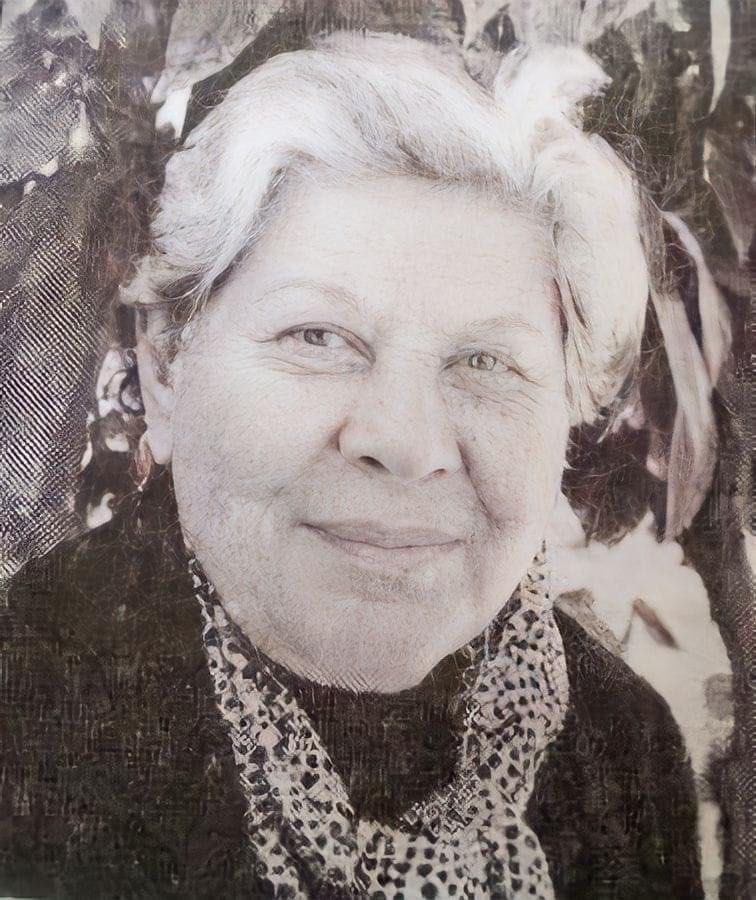
Pakize Rafik Hilmi was born in 1924 in Sulaymaniyah.
In 1929, with the help of a number of girls and boys from the city of Sulaymaniyah, she studied for a short time at Mullah Amin Mamiz’s Hucre (religious study room). In 1931, she entered primary school and completed this stage of her education in 1937.
In 1938, Pakize Rafik Hilmi left her family home and went to Baghdad, where she completed her secondary education in Arabic and later studied at the Teachers’ Training Institute. After graduating from this institute, she was appointed as the principal of the Girls’ School of Sulaymaniyah (Sidiqe), where she served for some time.
In 1949, Pakize resumed her studies. She completed higher teacher training and graduated as the second-ranked student, receiving her diploma.
In the same year (1949), she was admitted by Harvard University to the Department of Oriental Languages (Semitic and Iranian Languages). In 1951, she obtained her master’s degree there. She was the first Iraqi student to earn such a degree. That same year, she returned to Iraq and began working at the College of Arts, University of Baghdad, as a lecturer in linguistics and ancient Near Eastern history. Shortly afterward, she was sent to London to pursue a doctorate in linguistics. There, she began her academic research and studies, and in 1952 she married and established a family life. In 1954, she was sent to Cairo University to obtain a doctoral degree in Oriental languages; however, due to certain family reasons, she did not complete her studies there.
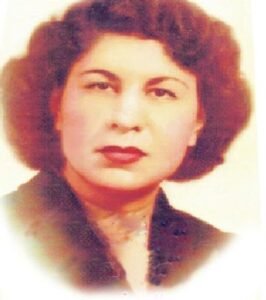
In 1958, Professor Pakize became the first woman in Kurdish national history to head the Department of Kurdish Language at the College of Arts, University of Baghdad, a position she held for several years with distinction.
Between 1967 and 1968, she served as a visiting professor at the University of Berlin, teaching Kurdish and Arabic languages.
In 1970, she became the first Kurdish woman to be elected a member of the Kurdish Academy of Sciences. Between 1977 and 1986, she worked as a visiting professor at the University of Amman (the capital of Jordan), continuing her intellectual and scholarly mission.
In 1986, she returned to her homeland and, at her own request, was appointed to Salahaddin University. In 1990, she retired. Until the day of her passing, on 13 August 2003, she never ceased reading, writing, or engaging in intellectual and social activities. She remained actively devoted to service, and the impact of her work is evident in all fields.
In addition to the achievements mentioned above, Professor Pakize was the first Kurdish woman to be a member of the British Royal Asiatic Society (R.A.S.), the Kurdish Writers’ Union, and the Iraqi Historians’ Association.
Overall, the intellectual, literary, and linguistic works of Professor Pakize include: hundreds of linguistic articles published in well-known Iraqi and Jordanian journals on the Kurdish language and ancient Kurdish history; a collection of poems titled “The Kurds and a Life Full of Reflection”; “A Kurdish–Persian–Old Pahlavi Dictionary” (manuscript); “The Kurdish Language from a Modern Linguistic Perspective”; and dozens of linguistic talks broadcast on Baghdad Radio. She also republished all of her father’s works and prepared and published her father’s memoirs.